Whether you’re buying your first home, adding an investment property to your portfolio, or building from the ground up, purchasing real estate is likely one of the biggest financial moves you’ll ever make.
While open homes and floor plans show you the potential, they rarely reveal what’s beneath the surface. That’s where property inspections come in.
Arranging the right inspections isn’t just a formality — it’s your ultimate safeguard against costly surprises, structural headaches, and unexpected financial strain down the track.
Here is a quick guide to the three main types of property inspections and why each is essential:
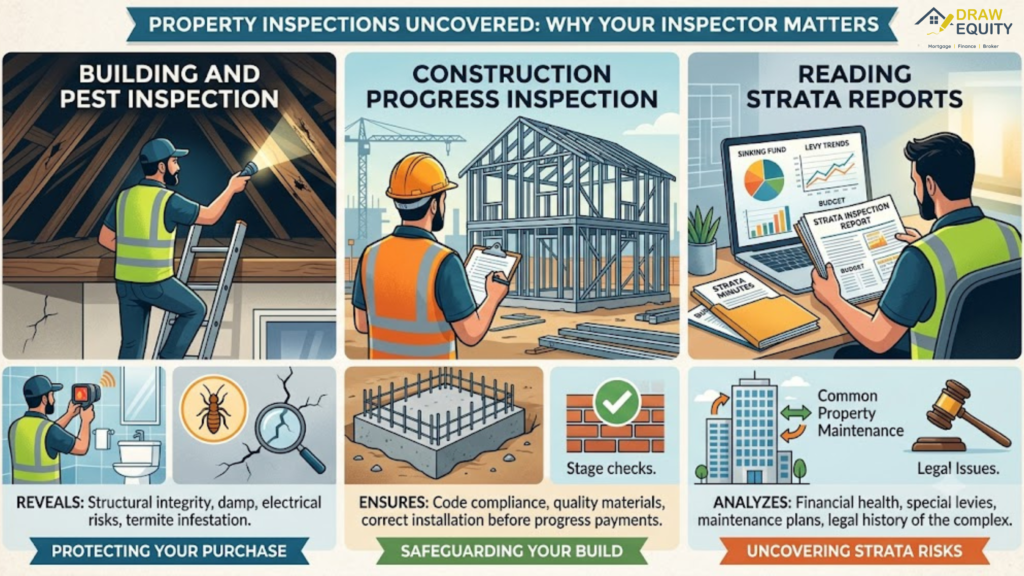
1. Building & Pest Inspections (For Houses)
A standard walk-through won’t catch hidden structural issues or timber-destroying pests. A combined Building & Pest Inspection gives you a detailed look into the physical health of the property.
-
- Building Inspection: Evaluates structural integrity, roofing, subfloors, moisture levels, and major defects like foundation cracking or compromised drainage.
-
- Pest Inspection: Specifically targets termites, borers, and wood-decay fungi that can silently eat away at a property’s timber frame.
Why it matters: Uncovering major defects early gives you leverage to negotiate a lower purchase price, request repairs before settlement, or walk away safely if the contract allows.
2. Strata Inspections (For Units, Apartments & Townhouses/Villas)
When you buy an unit, apartment or strata-titled townhouse/Villa, you aren’t just buying your individual unit — you’re joining a shared ownership scheme (the Owners Corporation/Body Corporate).
A Strata Report is a comprehensive audit of the building’s administrative and financial health.
-
- Financial Health: Checks the capital works (sinking) fund to ensure there are adequate reserves for future maintenance.
-
- Special Levies & Disputes: Identifies upcoming expensive works (e.g., roof repairs, waterproofing, cladding remediation) that could result in thousands in unexpected charges.
-
- Building Defects & By-Laws: Uncovers ongoing legal disputes, structural issues affecting the whole complex, or restrictive rules regarding pets and renovations.
Why it matters: A unit can look immaculate inside, but poor strata management or empty capital funds can cost you tens of thousands in unexpected special levies shortly after moving in.
3. Construction Progress Inspections (For New Builds & Renovations)
If you’re building a new home or undertaking a major renovation, construction is paid in progress stages (e.g., Slab, Frame, Enclosed, Fixing, and Practical Completion).
Independent Stage Inspections involve an experienced inspector checking the quality and compliance of the build before you sign off on each lender drawdown.
-
- Quality Assurance: Ensures framing, waterproofing, and structural elements meet the National Construction Code before they are covered up by plasterboard or cladding.
-
- Defect Rectification: Catches builder errors while the trade is still on site, rather than trying to fix them after hand-over.
Why it matters: It ensures your lender’s funds are only released for quality, completed work — keeping your builder accountable every step of the way.
Quick Summary: Which Inspection Do You Need?
| Property Type | Recommended Inspections | Primary Objective |
| House | Building & Pest Report | Identify physical, structural, and termite damage |
| Unit / Apartment / Townhouse / Villa | Building Inspection + Strata Search | Verify lot condition + audit building finances/levies |
| New Build / Construction | Independent Stage Progress Inspections | Ensure structural quality before releasing stage payments |
Timing is everything when it comes to organising a property inspection. Doing it at the wrong stage can either cost you money needlessly or leave you legally bound to a money pit.
Here is exactly when you need to order your inspection based on how you’re buying:
Buying At Auction
When to inspect: Before auction day (during the campaign)
-
- Why: Auction purchases are unconditional. The second the hammer falls and you are the winning bidder, you have legally committed to buy the property “as is.” There is no cooling-off period, and you cannot pull out or renegotiate if you discover structural problems later.
-
- Pro Tip: Ask the vendor’s agent if an independent inspection report is already available to buy at a reduced cost (often called a downloadable or shared report). If not, arrange your own qualified inspector early in the marketing campaign so you can bid with absolute confidence—or walk away before wasting emotional energy.
Buying via Private Treaty
When to inspect: Before exchanging contracts OR during the cooling-off period
-
- Standard Process (Pre-Exchange): Ideally, conduct your inspection before signing contracts or before the subject-to-building-and-pest clause deadline expires.
-
- If you have a Conditional Clause: If your offer is accepted subject to a building and pest clause (typically 5 to 14 days), order the inspection immediately so your solicitor/conveyancer has time to review the findings and negotiate repairs or a price reduction if major issues pop up.
-
- If there’s a Cooling-Off Period: In states where cooling-off periods apply, ensure the report is completed and reviewed well before the cooling-off window closes (usually 5 business days).
Got Questions About an Upcoming Purchase?
Navigating property inspections, contract clauses, and loan approvals can feel like a lot to juggle, but you don’t have to figure it out alone. If you are actively looking at properties, planning to bid at an auction, or simply want to chat through how to protect your contract options, please contact us. We’re always here to help you move forward with confidence!
